We live in a culture that often measures the value of a day by how much we accomplished.
How many messages did we answer? How many people did we care for? How productive were we? How efficiently did we move from one responsibility to the next?
Even our wellness practices can become another form of doing. We track our steps, perfect our poses, count our breaths, and evaluate whether we are getting better at relaxing.
Deep rest asks something different of us. For a while, we stop performing, even for ourselves.
I think of deep rest as the experience of feeling supported enough to soften. Little by little, we loosen the vigilance and effort we may have been carrying without realizing it.
For many people, that letting go does not happen immediately.
We may lie down while the mind continues making lists. We may finally become still and suddenly feel everything we have been too busy to notice. We may even feel guilty for resting when there are people to help, problems to solve, and work still unfinished.
If that happens, it does not mean we are resting incorrectly. It may simply mean that the body has grown accustomed to staying prepared.
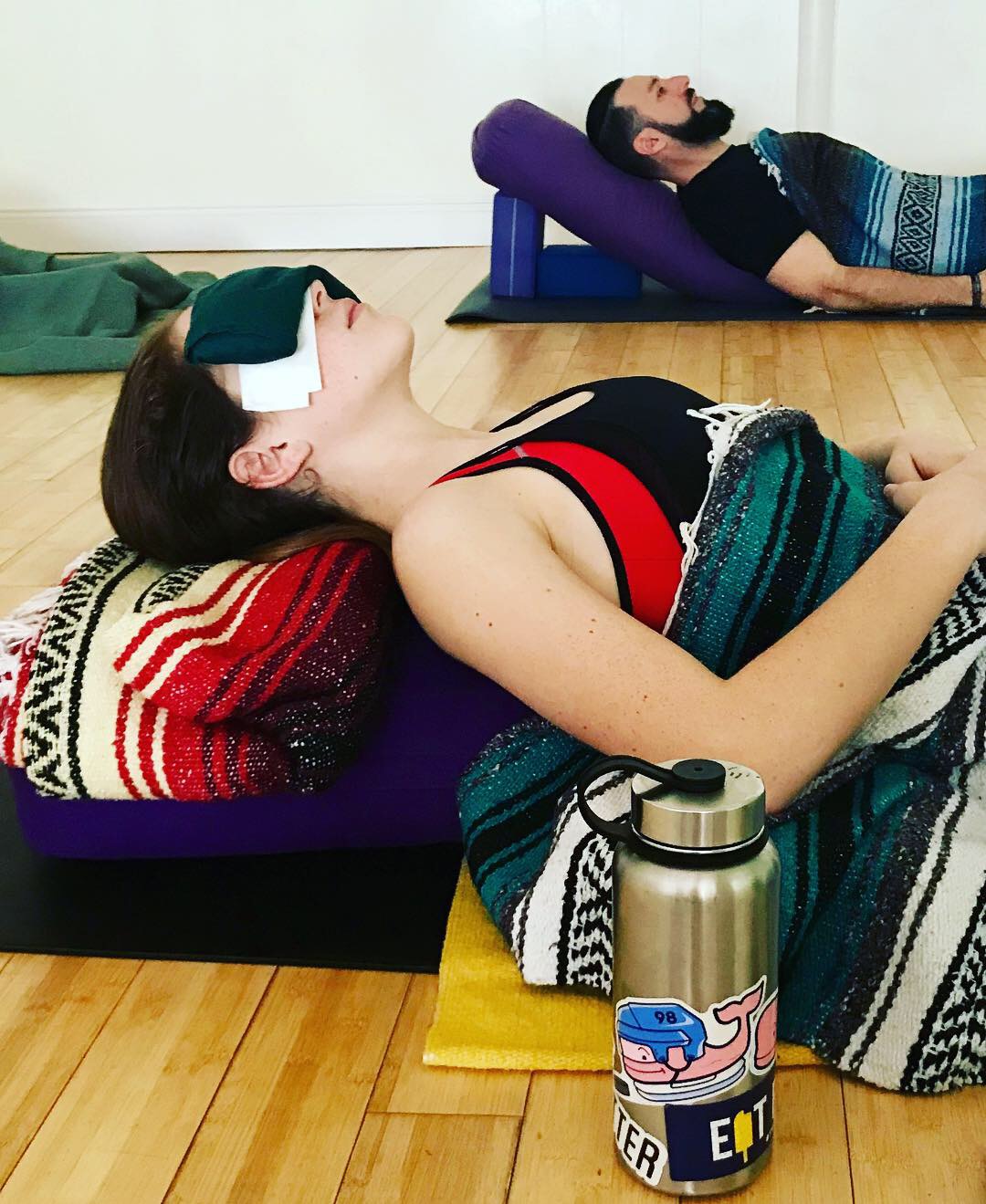
In restorative yoga, yoga nidra, breath awareness, and contemplative practice, I try to create room for another possibility. The body is supported, the pace slows, and nothing is being demanded of us.
We begin by noticing instead of forcing.
A jaw releases. The breath widens. The shoulders settle. Thoughts begin to feel less urgent. Rest often arrives in layers. We cannot always command it, but we can learn how to welcome it.
This kind of rest is not laziness or withdrawal. It is a form of listening.
When the constant noise quiets, we may hear what our bodies have been trying to tell us. We may recognize fatigue that needs attention, grief that needs tenderness, or a decision that has been obscured by urgency. Rest can reconnect us with parts of ourselves that productivity continually pushes aside.
This becomes especially meaningful during demanding seasons of life: pregnancy, caregiving, illness, grief, menopause, professional change, or the many transitions that come with aging.
In these seasons, the old habit of pushing through may stop working. I do not see that as failure. It can be an invitation to develop a different relationship with our energy and our sense of worth.
Deep rest reminds me that our value does not depend on how useful we are.
We can pause before we are completely depleted. A quiet moment does not need to be justified by how productive it might make us later.
Rest has value of its own.
It also makes room for our experiences to settle. Learning, healing, and creativity all need space. Sometimes understanding comes when we create enough quiet for it to emerge.
This is why restorative practices are central to so much of my work. I have seen how they can help us return to daily life feeling more present and more able to recognize what we need.
There are times to move, build, advocate, teach, and care for others. There are also times to let ourselves be held. A whole human life has room for both.
Deep rest is not doing nothing.
It is one way we remember that we are more than what we produce, and that constant effort cannot give us everything we need.